
External Affairs Minister Pranab Mukherjee will embark on a visit to China from June 4 which Beijing hopes would promote "mutual political trust" and deepen "practical cooperation" between the two neighbours. Mukherjee would hold talks with his Chinese counterpart Yang Jiechi on better implementing the consensus on developing the partnership of strategic cooperation.

The talks will focus on 'delimitation of the border, boundary management and a host of bilateral and international issues'.
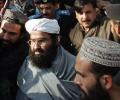
Early this year the US along with the United Kingdom and France approached the United Nations's sanctions committee for the ban on Azhar.

Against the backdrop of the standoff between Indian and Chinese troops in eastern Ladakh, the White House press secy said the United States was closely monitoring the current situation and supports its peaceful resolution.
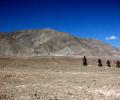
While the de-escalation process was underway, a violent face-off took place on Monday night between Indian and Chinese troops leading to the death of 20 Indian soldiers.
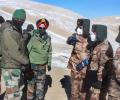
'We hope the Indian side will work with China to follow through the important consensus of our two state leaders, abide by relevant agreements and treaties to de-escalate the tension at the border'
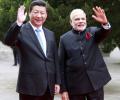
China's Vice Foreign Minister Li Baodong again harped on the need to build consensus over the admission of new members in the 48-member Nuclear Suppliers Group.

Xi-Kim meeting took place amid concern in Beijing that the North Korean leader is getting too close to US sidelining China pointing to its declining importance in the Korean Peninsula peace process.

Army Spokesperson Colonel Aman Anand said troops from China's People's Liberation Army (PLA) 'violated' the consensus arrived at during military and diplomatic engagements on the ongoing standoff in eastern Ladakh, and carried out provocative military movements to change the status quo.

The frontline troops of China and India have "completed" disengagement at most locations of their border, a senior Chinese official said on Tuesday, adding the situation on the ground is easing.

China's highest ranking defence officer will visit India next month, the first such visit in a decade as the Chinese military seeks to expand relations with its Indian counterpart.
Jaishankar's talks with Yang and later in the Strategic Dialogue were expected to cover the key India-China differences like China blocking India's bid to join the NSG and UN ban on Azhar.

India, Pakistan, Israel and South Sudan were the four UN member states which have not signed the NPT, the international pact aimed at preventing the spread of nuclear weapons.
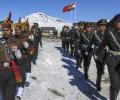
The decision to disengage the forces, locked in a bitter standoff for the last six weeks in eastern Ladakh, was taken at a nearly 11-hour-long meeting between senior Indian and Chinese commanders in Moldo on the Chinese side of the Line of Actual Control (LAC) on Monday.
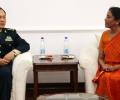
Wu said both the countries are also in consultations to work on a new Memorandum of Understanding (MoU) between the defence ministries.

In the first highest level face-to-face contact between the two sides after border tension erupted in eastern Ladakh in early May, Singh and Wei met for two hours and 20 minutes in Moscow on Friday evening on the sidelines of a meeting of the defence ministers of the Shanghai Cooperation Organisation.

Pakistan is once again becoming a frontline State in big-power rivalry. But this time around, Pakistan stands to gain out of its geography, observes Ambassador M K Bhadrakumar.
During their hour-long in-person meeting on the sidelines of a Shanghai Cooperation Organisation (SCO) conclave in Dushanbe on Wednesday, External Affairs Minister S Jaishankar also told his Chinese counterpart and State Councilor Wang Yi that any unilateral change in the status quo along the Line of Actual Control (LAC) was 'not acceptable' to India and that the overall ties can only develop after full restoration of peace and tranquillity in eastern Ladakh.
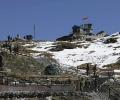
The government on Friday expressed deep concern over China constructing a road in the disputed Doklam area near Sikkim

The US has been, historically, a sleeping partner in India-China relations. Today, any attempt by the Modi government to make a bilateral move to improve relations with Beijing could upset Biden's apple cart, notes Ambassador M K Bhadrakumar.

'Pakistan has worsted India in the Afghan proxy war and the defeat becomes a template of regional politics,' points out Ambassador M K Bhadrakumar.
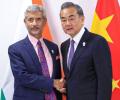
The joint statement said Jaishankar and Wang agreed that both sides should take guidance from the series of consensus reached between leaders of the two countries on developing India-China relations, including not allowing differences to become disputes.

'I think we're standing up to the Chinese. Our allies following us, whether it's Huawei and the UN Germany now coming up'
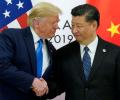
"We are capable of properly resolving the issues between us through dialogue and consultation. We do not need the intervention of the third party", he said.

'President-elect Biden, in particular, has deep knowledge of, and experience with, dealing with India, serving as a custodian and champion of the relationship long before it was fashionable to do so.'

The talks came a day after the two armies began a limited disengagement in a few areas in Galwan Valley and Hot Spring in a demonstration of their intent to end the row peacefully.
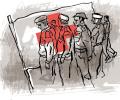
'All PoWs recounted that one of the worst aspects of their captivity in Tibet was the constant attempt at brainwashing by Chinese Communist propaganda,' reveals Claude Arpi.
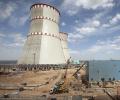
The NSG plenary meeting is due to be held next week in the Swiss capital of Bern.

The Wednesday talks took place amid a war of words between the two sides on perception of the LAC, the de-facto Sino-India border spanning a length of nearly 3,500 km.

'By treating Nepali politicians as shabby buffoons to be pampered one day and collared another day, India badly exposed itself.' 'A belief got entrenched in the Nepalese mind that we are a dangerous neighbour,' observes Ambassador M K Bhadrakumar.

Chinese Vice Foreign Minister Liu Zhenmin "called in" India's envoy in Beijing Ashok Kantha to lodge a protest on Modi's visit on Friday
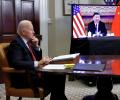
The highly-anticipated summit, which began early Tuesday, is the third engagement between Xi, 68, and Biden, 78, since February.
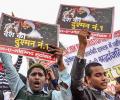
As it has done in the past, Beijing put a technical hold on the proposal just as the deadline was about to end.

Trump threatens to impose additional $200 billion in tariffs on China, Beijing vows to retaliate

Welcoming Jaishankar, Foreign Minister Wang referred to the Indo-Pak tensions without directly mentioning about India scrapping the Article 370 of the Constitution that gave special status to Jammu and Kashmir.

He also said it was important that even during the difficult moments of this "crisis" India has been communicating and engaging with China.
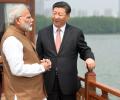
The BRI, a pet initiative of President Xi, is aimed at promoting network of roads, ports and rail networks all over the world to spread China's influence.
The Ministry of External Affairs (MEA) spokesperson Anurag Srivastava said complete disengagement requires re-deployment of troops by each side towards their regular posts on their respective sides of the Line of Actual Control(LAC) and this can be done only through mutually agreed actions.
